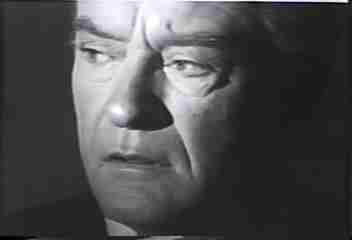
Truman Capote
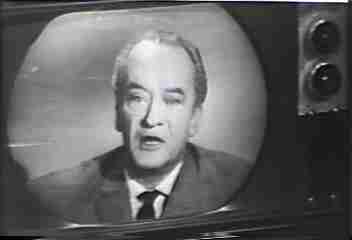
Truman Capote brings a televisual eye to Laura in its 1968 ABC drama version. In the context of television, the plot of Laura becomes "sordid and undignified," and Capote is able to mine the homosocial/homosexual intimations of the plot. It's Laura without aura, told with police-blotter directness. The archival copy is particularly interesting as a found object since, for some reason of copyright or a production snafu, the musical track is entirely missing. The sound of Laura is imploded, and consequently, the action seems to take place in a vacuum.
If one compares the television and the film versions, especially in the last scene, one can divine many insights on the differences between televisual and filmic storytelling. These differences are particularly powerful, in that these multiplications of Laura are, in their own ways, metacommentaries on their respective media of delivery. That is, while Caspary deconstructed the idea of point of view in her fiction. and while Preminger mined the perversities of the film and radio voice, Capote--who has Lydecker (played by George Sanders) deliver his final, taped speech on television-- undermines the romance that is implicit in lost and floating voices. (Lynch will return to the romance of the disembodied in his "Laura"--Twin Peaks--which references not one media, but the profusion of recording devices and representational histories which compose a postmodern, mediated landscape. He will later attempt to evacuate the aura in his prequel Fire Walk with Me).
Clip 1 tvredux1.mpg
Clip 2 tvredux2.mpg
Clip 3 tvredux3.mpgNotice in the television version the amount of distraction from the televisual image within the diegesis. Also, the monologue goes on and on, distending the temporality of this final scene as is typical of the soap opera, as well as evacuating any chance for idealistic identification with Lydecker. While Clifton Webb's Lydecker seems to approach poetry, Sanders' Lydecker, while just as knowing, is always on the verge of abject panic.